
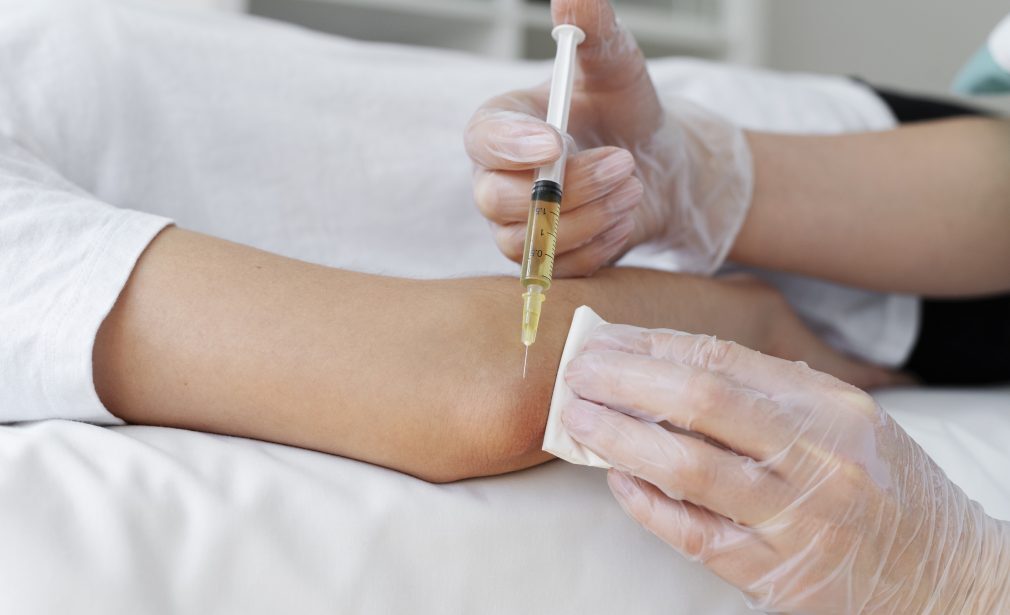
The Problem: When Every Movement Causes Discomfort
Joint pain is more than just an unpleasant sensation; it is a limitation of your freedom. Over time, cartilage wears down, natural lubrication decreases, and symptoms arise that should not be ignored:
- Clicking and grinding sensations while walking.
- Morning stiffness in knees, shoulders, or hips.
- Aching pain after physical exertion.
- Recurring inflammation and swelling.
To address these issues, we utilize two advanced methods of conservative treatment.
1. Hyaluronic Acid Injections: A “Liquid Prosthesis”
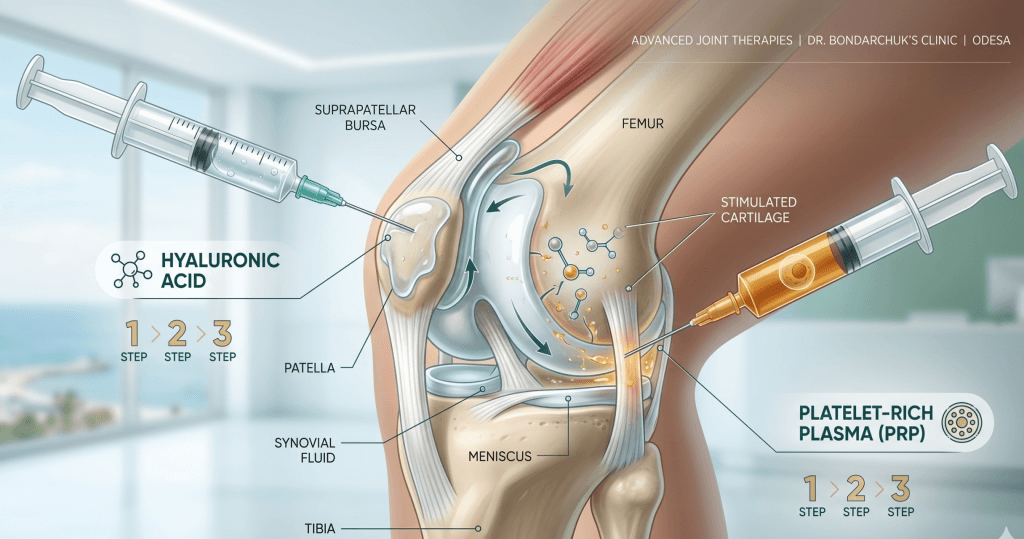
Hyaluronic acid is a natural component of our synovial fluid. With age or due to injury, its levels decrease, leading to “dry” friction in the joint.
- How it works: Injecting a certified hyaluronic acid preparation acts like lubricant for a door hinge. It restores the viscosity of the joint fluid, creates a protective film on the cartilage surface, and improves shock absorption.
- Benefits: Immediate relief, long-term protection (6–12 months), and slowed progression of osteoarthritis.
2. PRP Therapy: Biological Renewal via Your Own Plasma
PRP (Platelet-Rich Plasma) therapy uses plasma from your own blood, enriched with platelets. This method harnesses your body’s hidden resources for healing.
- How it works: Platelets contain a vast amount of “growth factors”—proteins that trigger tissue regeneration. During the procedure, we isolate a concentrate of these cells and inject it directly into the damaged area.
- Benefits: 100% natural (zero allergy risk), treats the cause rather than just the symptom, and is effective for both arthritis and sports injuries (ligament tears, tendonitis).
The “Double Strike” Effect: Why Combine Methods?
While each procedure is self-sufficient, in many clinical cases, I recommend combining them. This creates a synergistic effect:
- Hyaluronic Acid prepares the “foundation”: it creates a favorable environment and lubricates the joint.
- PRP Therapy works significantly more effectively on this prepared background, triggering cellular regeneration faster.
FAQ
The sensation is comparable to a regular intramuscular injection. Most patients tolerate it easily
Hyaluronic acid is often a single injection (once a year). PRP therapy usually requires 3–5 sessions at intervals of 7–14 days
Hyaluronic acid provides relief almost immediately. PRP has a cumulative effect that becomes noticeable after 2–3 weeks