
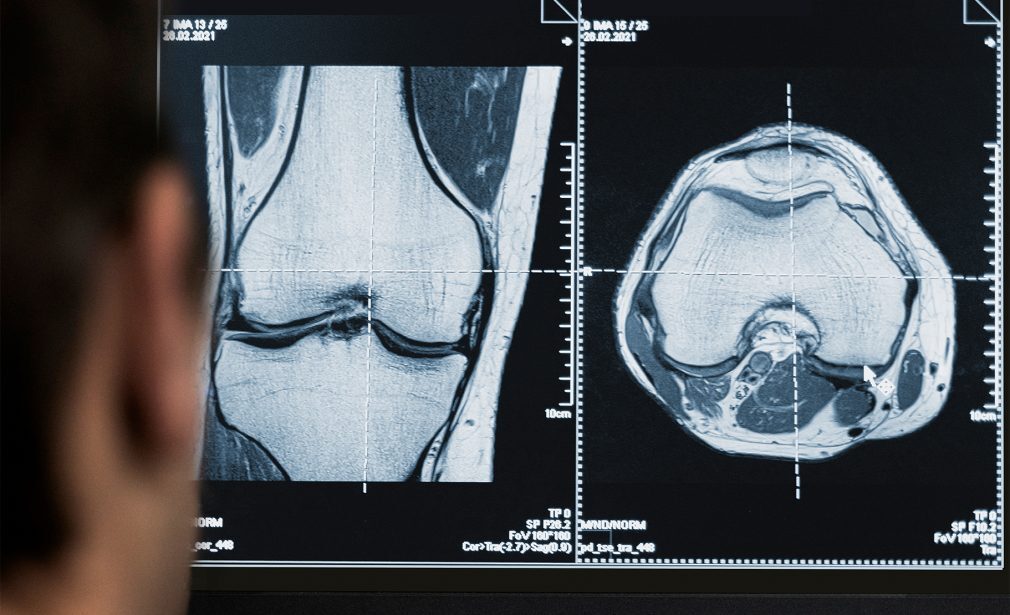
The Problem: When the Joint "Wears Out"
Osteoarthritis is a chronic disease where the protective cartilage on the ends of your bones gradually breaks down. Imagine a mechanical bearing where the lubricant has dried up: the parts begin to rub against each other, heat up, and deform. Your joint behaves in exactly the same way.
How to Recognize Osteoarthritis?
- Pain Under Load: Initially, pain appears only after prolonged walking or lifting weights, but over time, it becomes constant.
- Start-up Stiffness: Difficulty taking the first few steps in the morning or after sitting for a long time.
- Characteristic Grating (Crepitus): A sensation of “sand” or friction inside the joint.
- Limited Range of Motion: You notice that you cannot fully bend your leg or raise your arm as high as before.
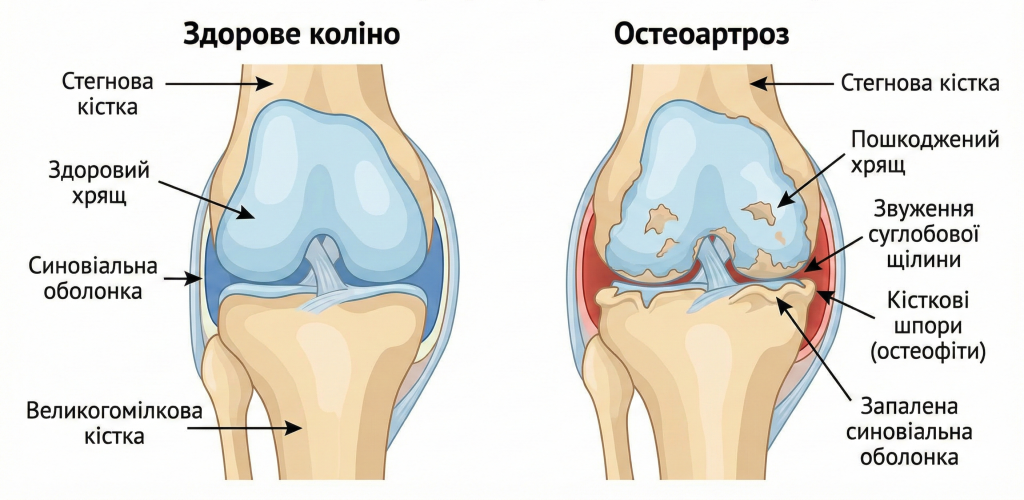
Diagnosis: Seeing the Problem from Within
Effective treatment begins with a precise understanding of the disease stage. We utilize:
- Clinical Examination: Checking the range of motion, joint stability, and areas of maximum tenderness.
- Digital X-ray: The “gold standard” for visualizing joint space narrowing and the presence of osteophytes (bone spurs).
- MRI and Ultrasound: To assess the condition of soft tissues, cartilage, and the presence of inflammatory fluid (synovitis).
Methodology: Three Stages of Fighting Osteoarthritis
My strategy is to delay joint aging as much as possible using all available methods of modern medicine.
- Conservative and Medical Treatment In the early stages, we focus on pain relief and cartilage support:
- Medications: NSAIDs to reduce inflammation and chondroprotectors to nourish cartilage tissue.
- Injection Therapy: “Liquid prosthetics” (hyaluronic acid) and PRP therapy (platelet-rich plasma) for biological regeneration.
- Physical Rehabilitation and Exercise Therapy A joint only receives nutrients when it moves.
- Muscle Core: Specific exercises help strengthen the muscles around the joint, taking off part of the load.
- Biomechanical Correction: Using custom Formthotics insoles for proper body weight distribution.
- Surgical Methods (When Conservation Fails) If the cartilage is significantly destroyed, we offer minimally invasive procedures:
- Arthroscopic Debridement: “Cleaning” the joint of cartilage fragments and growths through micro-incisions.
- Corrective Osteotomy: Changing the bone axis to shift the load from the worn part of the joint to the healthy one.
- Joint Replacement (Arthroplasty): Replacing the joint with a modern implant (as a final measure in advanced stages).
Rehabilitation and Lifestyle
Treatment of osteoarthritis is a partnership between the doctor and the patient.
- Weight Control: Every extra kilogram of body weight adds an additional 4 kg of pressure to the knee joint.
- Consistency: Performing home exercises according to the personalized program we provide.
- Preventative Check-ups: Monitoring the condition of the joint every six months to prevent flare-ups and complications.
FAQ
It is impossible to return cartilage to how it looked at age 18. However, we can stop the destruction, eliminate pain, and restore the joy of active movement.
In OA, the pressure inside the bone and joint changes. When atmospheric pressure drops, nerve endings in the damaged joint react with pain.
Yes, it is the best sport for OA. In water, body weight does not press on the joints, allowing for safe mobilization and muscle strengthening
If pain persists even at rest, and X-rays show a complete absence of joint space (bone-on-bone), this is a direct indication for surgery.