
The Problem: Chronic Shoulder Pain and Instability
- Recurrent Shoulder Dislocation (Chronic Instability): After an initial injury, the “labrum” often fails to reattach to the bone. The shoulder loses stability and begins to “pop out” even during minor movements (like dressing or sleeping), damaging bone tissue with each dislocation.
- Rotator Cuff Tears: A tear in the deep muscle tendons responsible for lifting and rotating the arm. Patients feel severe weakness and often cannot lift their arm sideways or hold a cup.
- Night Pain (Impingement Syndrome): Exhausting pain that worsens at night, making it impossible to sleep on the affected side. It occurs when inflamed tendons mechanically rub against the bone (acromion).
- Frozen Shoulder (Adhesive Capsulitis): The joint capsule becomes inflamed and shrinks, severely limiting any movement, such as reaching behind your back.
Methodology: Micro-Anchor Technology
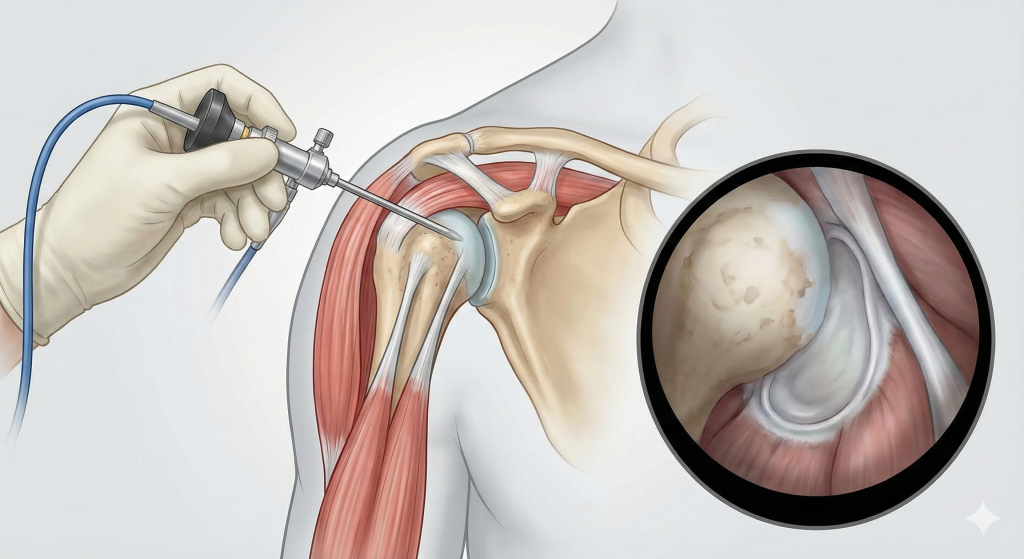
- Micro-Anchors: To fix torn tissues, we use specialized anchors (only 2-3 mm in diameter) inserted into the bone. They come with high-strength sutures that I use to “sew” the labrum or tendons back to their natural position.
- Biodegradable Materials: We often use anchors that fully dissolve within 1-2 years and are replaced by your own bone tissue. No foreign bodies remain, and it doesn’t interfere with future MRIs.
Shoulder surgery is the ‘aerobatics’ of orthopedics because we work with delicate tendons rather than just bones. My task is to restore your full range of motion, not just ‘patch’ a hole
Preparation for Surgery
- Consultation and MRI: The key stage is the analysis of MRI scans (preferably with a 1.5 or 3 Tesla strength). The surgeon must precisely plan how many anchors will be needed for fixation, so the images must be recent and of high quality.
- Laboratory Tests: Standard preoperative screening (blood tests, ECG, chest X-ray) should be completed 1–3 days before the surgery date. If you are taking blood-thinning medications (aspirin, clopidogrel, etc.), they must be discontinued 5 days before the intervention after consulting with your cardiologist.
- Home Preparation: Prepare your living space: place frequently used items at waist level so you don’t have to reach up for them. Purchase the orthosis (abduction sling) prescribed by your doctor in advance, as it will be needed immediately in the operating room.
The Surgical Process
- Positioning and Anesthesia: The surgery is performed in the “beach chair” position (semi-sitting). Combined anesthesia is used (nerve block of the shoulder + light sedation) to ensure you feel as comfortable as possible and remain pain-free upon waking.
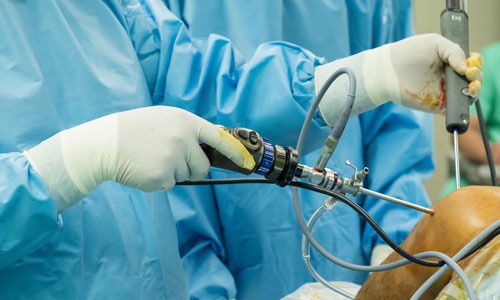
- Anchor Fixation: Through 3–4 small portals, the surgeon inserts the arthroscope. The muscle attachment site is prepared using specialized instruments, after which micro-anchors are screwed into the bone. The torn labrum or tendon is then “sewn” back into its natural place using the high-strength sutures from the anchors.
- Fixation: After the skin incisions are sutured, the patient is placed into a specialized abduction sling (orthosis) while still on the operating table. This fixes the arm in the correct position, relieving tension from the repaired tendons.
Rehabilitation: Restoring Shoulder Function
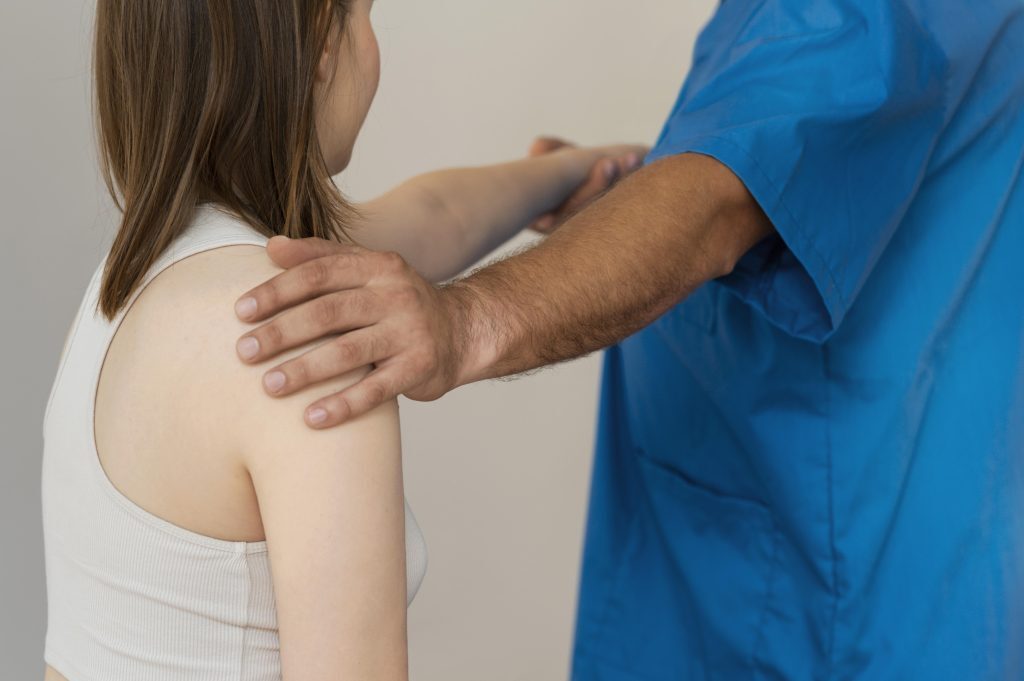
Working with the Doctor (Early Weeks): The shoulder is a complex joint that should not be mobilized independently due to the risk of damaging the internal sutures. You will regularly visit the clinic, where a rehabilitation specialist or I will perform gentle movements with your arm (passive gymnastics), safely increasing the range of motion.
Exercises in the Rehabilitation Gym: Once the tendons have healed, we move to the active phase in our gym. Under close supervision, you will perform exercises using specialized equipment and resistance bands to “retrain” the muscles and stabilize the joint.
Constant Monitoring: During every visit, I personally assess your progress by measuring abduction and rotation angles. If any discomfort arises, we immediately adjust the exercise program on the spot to ensure the recovery process remains pain-free and without complications
Full FAQ
For the first 2–3 weeks, we recommend sleeping in a semi-reclined position (using high pillows) or on your healthy side. Sleeping directly on the operated shoulder is strictly prohibited until the tendons have fully healed
For rotator cuff repairs or instability surgery, you must wear an abduction sling (with a pillow) for 4–6 weeks. It should only be removed for showering and performing your prescribed rehabilitation exercises
Even if you have an automatic transmission and the surgery was on your left arm, driving is generally allowed no earlier than 6 weeks post-op. However, for maximum safety and proper healing of the “active” shoulder, it is best to avoid driving entirely during the initial recovery period.
Yes, you can type and move a mouse as early as the day after surgery while still wearing the brace. The key is to keep your elbow down and avoid tensing or lifting your shoulder.
Yes, most modern anchors are biodegradable and eventually transform into your own bone tissue. If titanium anchors are used, they are bio-inert, meaning they do not cause any reaction and do not require removal.